
Some projects are built for one specific job.
This one is not.
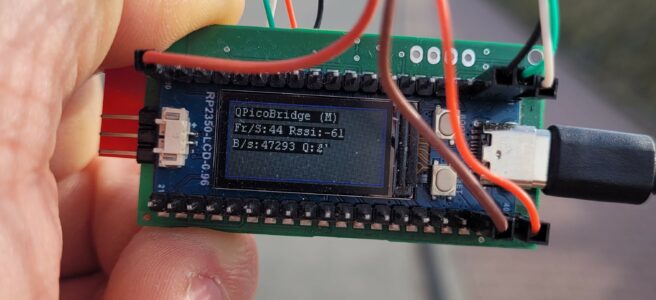
The radio link I’m working on was not designed specifically for image transmission. It is a more general wireless transport built on my own firmware running on a Raspberry Pi Pico 2 with an SX1280 transceiver. The modulation is FLRC, and the link uses frequency hopping across 16 channels.
For now, image data is simply one of the hardest real-world tests I can throw at it.
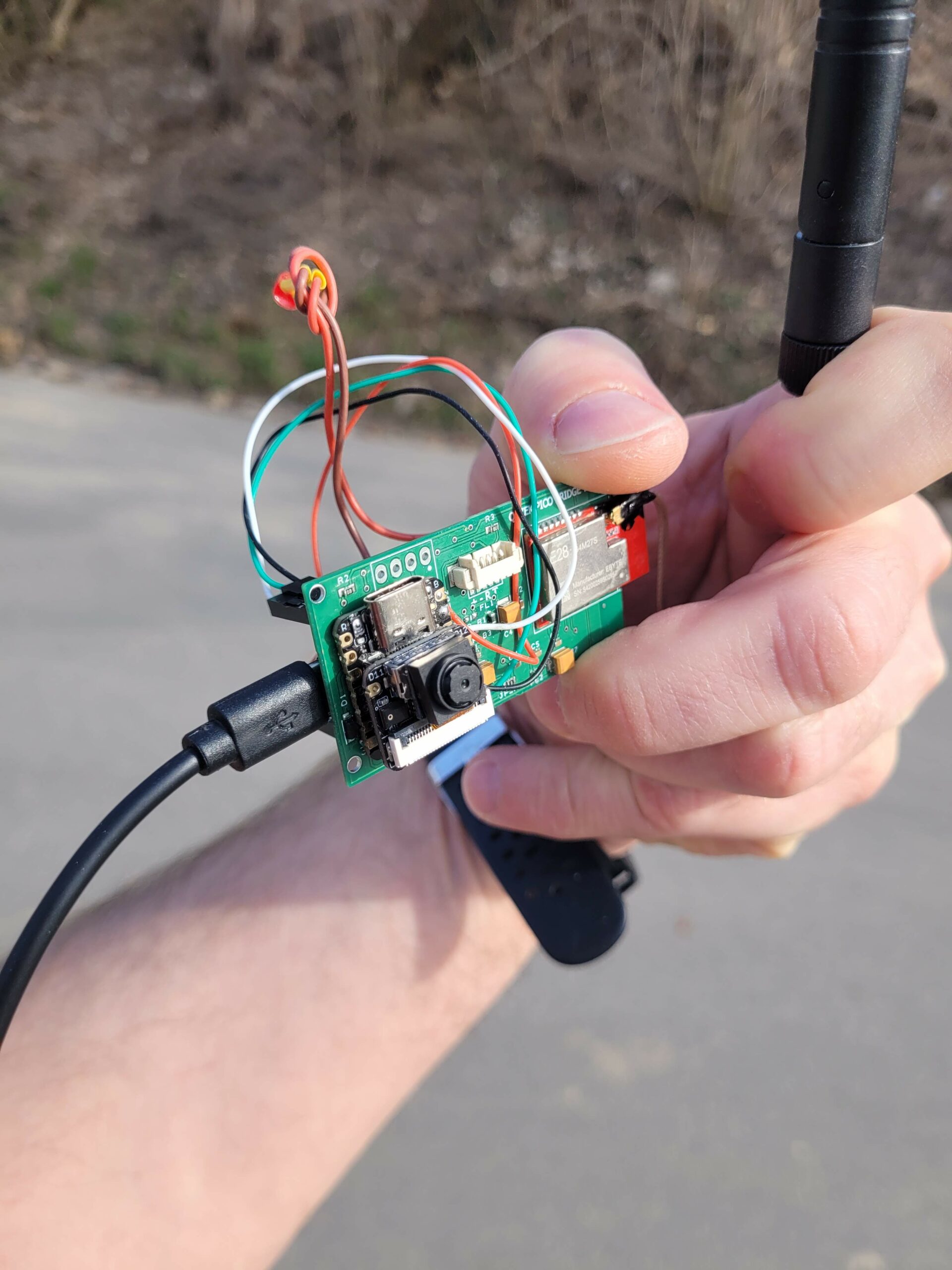
At the source side, I’m using an ESP32-S3 camera module to generate JPEG frames. The point is not to build a polished camera product, but to stress the link with a payload that is continuous, timing-sensitive, and visually unforgiving. If the transport has weaknesses, image transmission reveals them immediately.
That is exactly why it makes such a good test.
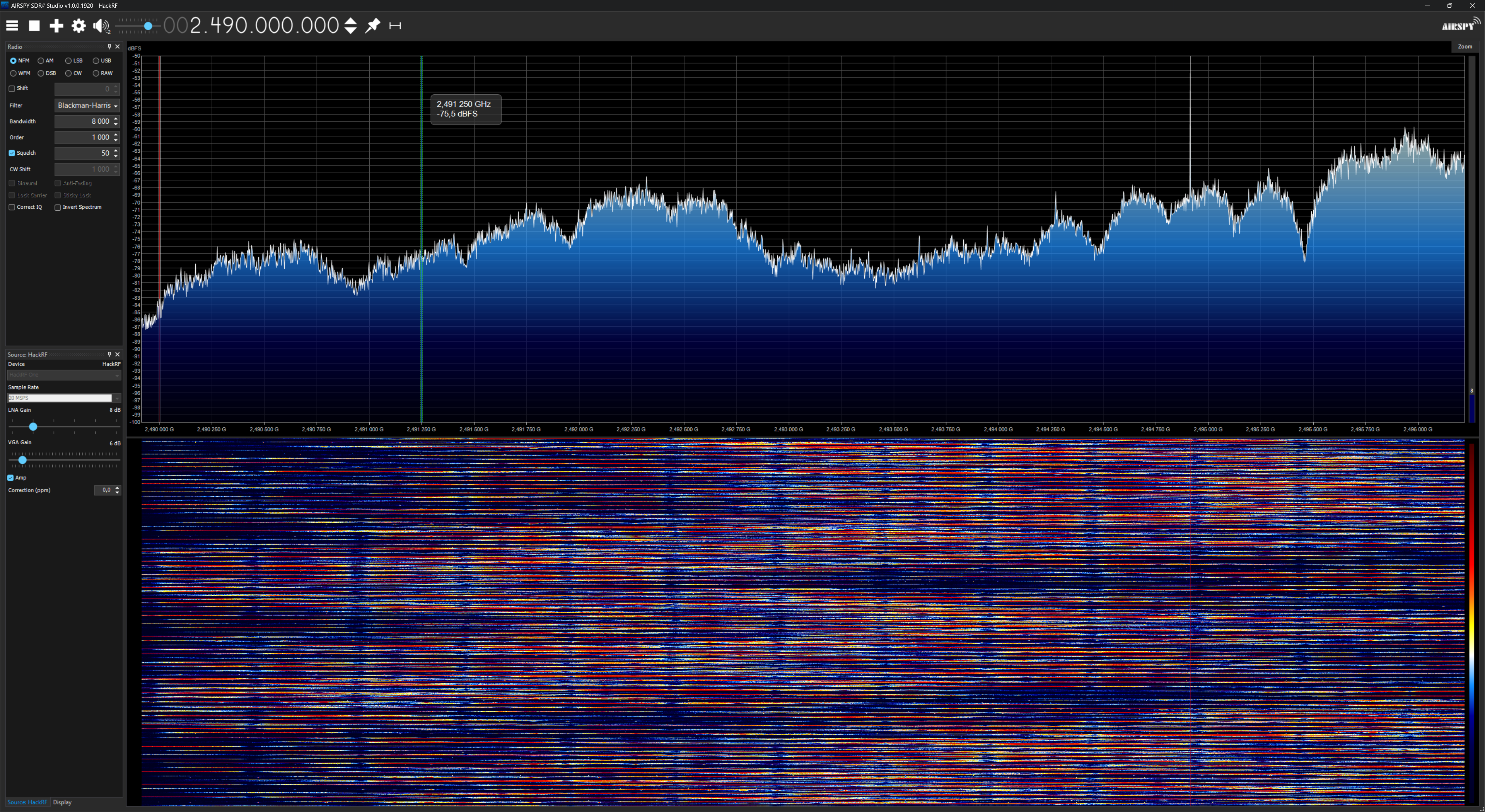
To verify that the hopping really behaves as intended, I also captured the signal on an SDR. You can clearly see that the system is not sitting on one fixed frequency — it is moving across multiple channels as part of the link design.
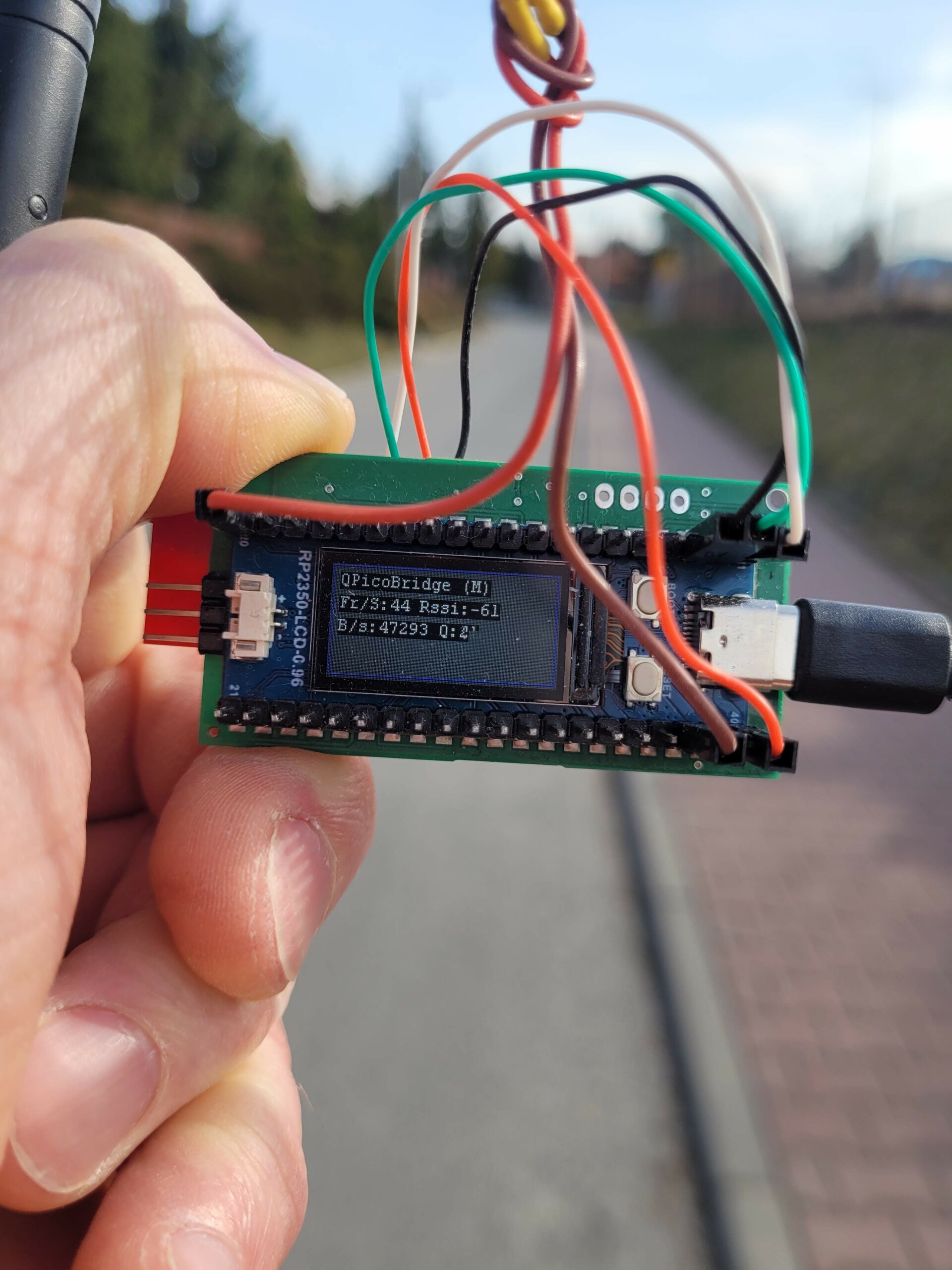
At the moment, the system is running at:
- 450 packets per second in one direction,
- 50 packets per second in the other direction,
- with 120 bytes of payload per packet.
That does not make it a video link in the traditional sense. What it does make it is a very useful experimental platform for testing throughput, buffering, framing, loss recovery, and general link behavior under a demanding data stream.
On the receiver side, another Pico-based board with my firmware collects the packets and forwards them to the PC, where the incoming data is reconstructed and displayed. This makes it easy to see not only when the link works well, but also how it fails.
When everything lines up, the result is a clean frame that proves the whole chain is doing its job: source, radio transport, receiver, and reconstruction.
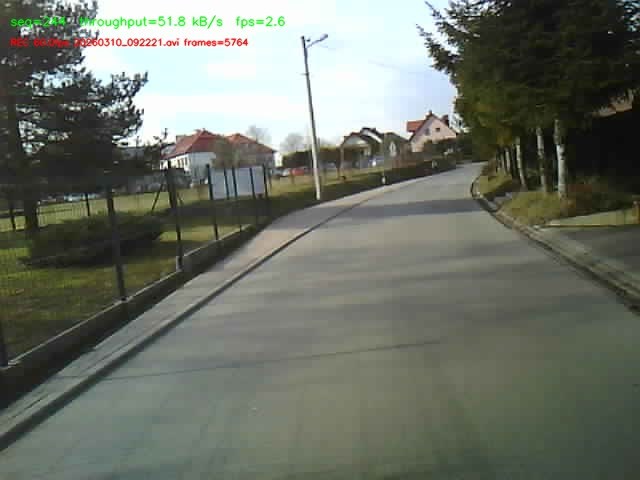
And when it does not, the image breaks in ways that are actually very informative. Corrupted frames are not the goal here — they are part of the measurement. They show exactly where the transport still needs improvement, whether that is synchronization, buffering, or frame recovery logic.
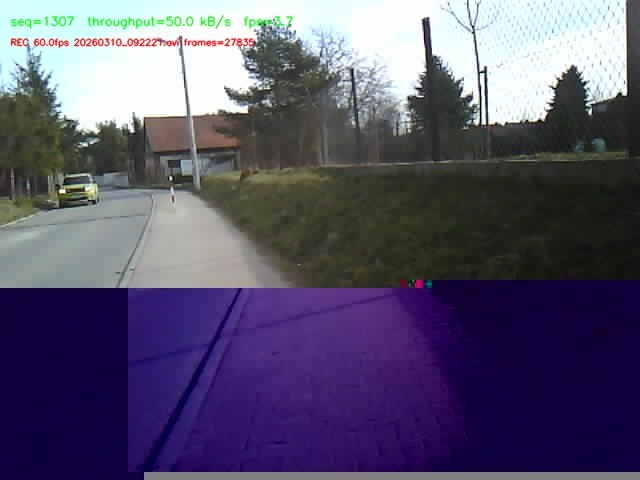
So while the image stream looks like the headline feature, it is really just a test case — a very demanding one — for a more general wireless data link.
And that is what makes this prototype interesting to me.
It is not “a camera link project” in the narrow sense.
It is a custom radio transport system being pushed with live image data to see how far it can go.
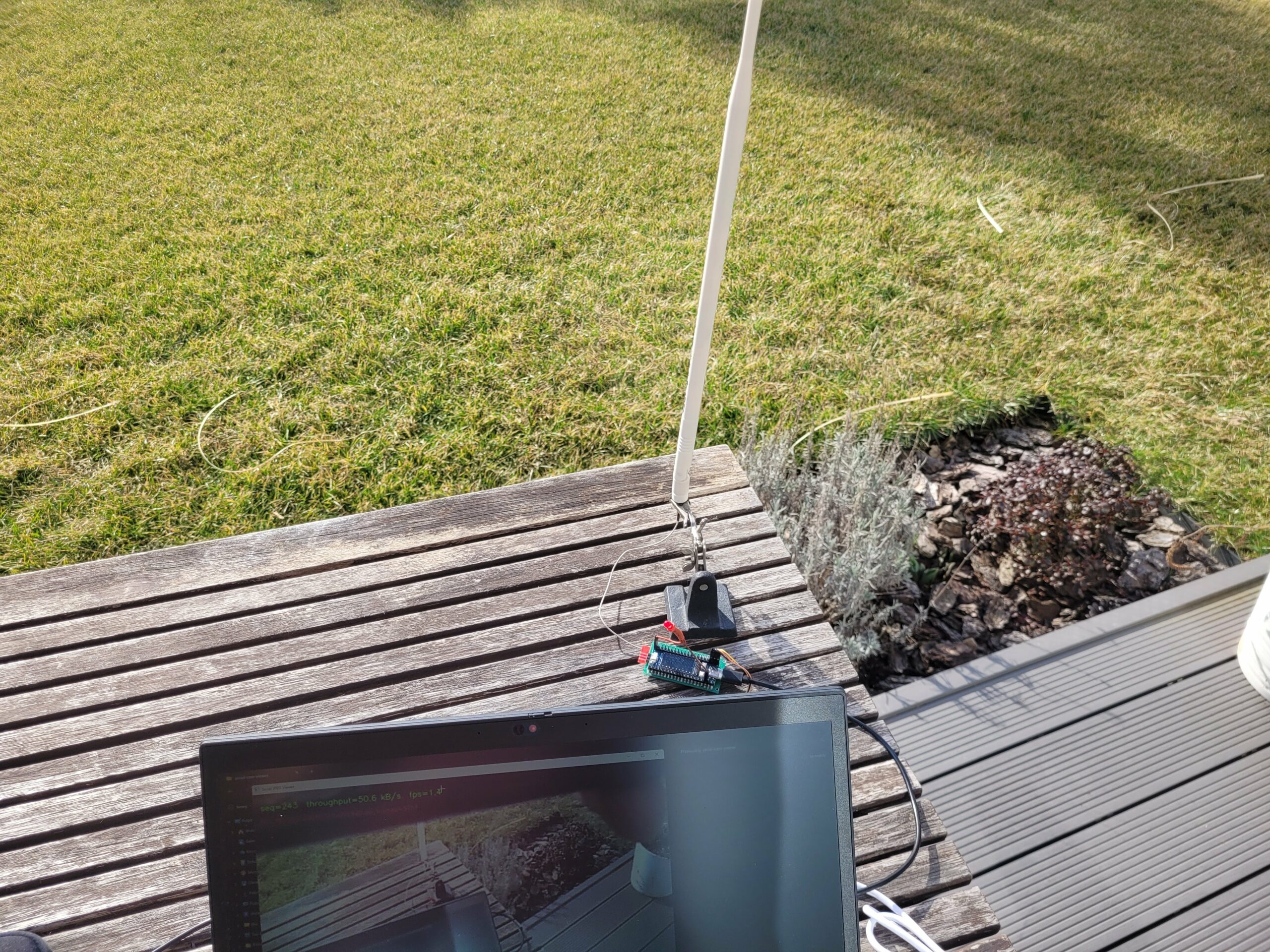
Still experimental.
Still rough.
But already useful.